

 EN
EN FR
FRDreams and Signs
Signs of Anxious Attachment Style
Written by Tarot Center Staff
Do you constantly check your phone waiting for a reply? Do you spiral into worry when your partner seems distant or quiet? Do you feel a persistent, low-level fear that the person you love might leave you — even when nothing is wrong? If so, you may be recognizing the signs of an anxious attachment style. This deeply rooted emotional pattern affects millions of people worldwide, shaping how they love, argue, and navigate intimacy — often without even realizing it. Understanding anxious attachment is not about labeling yourself; it is about gaining the clarity you need to build relationships that are grounded, balanced, and genuinely fulfilling.
Attachment theory, first developed by British psychologist John Bowlby and later expanded by researchers like Mary Ainsworth, shows us that the way we were cared for as children creates a blueprint for how we relate to romantic partners as adults. When early caregiving was inconsistent — warm and available one moment, emotionally absent or unpredictable the next — the developing nervous system learns that love is something that must be constantly monitored and fought for. This early adaptation becomes the anxious attachment style, and it shows up in adult relationships as anxiety, hypervigilance, and an overwhelming fear of abandonment. In this article, we explore the most telling signs of this attachment pattern, examine its roots, and discover how Tarot can serve as a powerful mirror for deeper self-understanding.

What Is Anxious Attachment Style?
Before diving into the specific signs, it is worth establishing a clear understanding of what the anxious attachment style actually is. Also called "preoccupied attachment" in adult attachment research, it is one of four main attachment styles identified by psychologists: secure, anxious, avoidant, and disorganized. People with an anxious attachment style typically hold a negative view of themselves (seeing themselves as unworthy or not enough) while holding a positive but idealized and often fearful view of others (seeing partners as desirable but potentially withdrawing). This combination creates a constant pull toward intimacy paired with an equally powerful fear of losing it.
The Origins: How Anxious Attachment Forms
Anxious attachment typically develops in early childhood when the primary caregiver — a parent or guardian — responds to the child's needs in an inconsistent or unpredictable way. This does not necessarily mean abuse or severe neglect; it can be as subtle as a parent who was sometimes warm and deeply present, and other times distracted, emotionally unavailable, or overwhelmed by their own difficulties. The child cannot predict when comfort will be available, so they develop a strategy of heightened vigilance and amplified emotional signaling — crying louder, clinging more intensely — to maximize the chance of getting a response. This strategy becomes wired into the nervous system and resurfaces in adult romantic relationships as the full constellation of anxious attachment behaviors.
Comparing the Four Attachment Styles
Understanding how anxious attachment differs from the other styles helps clarify both its nature and its impact. The table below offers a comparative overview of all four attachment styles across key dimensions:
| Attachment Style | Self-View | View of Others | Typical Behavior in Relationships |
|---|---|---|---|
| Secure | Positive, worthy of love | Reliable and trustworthy | Communicates needs clearly, tolerates distance, resolves conflict well |
| Anxious | Negative, insecure, not enough | Desirable but unpredictable, may leave | Clingy, hypervigilant, constantly seeks reassurance |
| Avoidant | Positive, self-sufficient | Intrusive, unnecessary for well-being | Emotional distance, suppresses feelings, values independence above all |
| Disorganized | Negative, confused, unstable | Both source of fear and comfort | Contradictory behaviors, push-pull cycles, difficulty with emotional regulation |
The Most Telling Signs You Have an Anxious Attachment Style
Anxious attachment reveals itself through a recognizable cluster of thoughts, feelings, and behaviors. These patterns tend to intensify during moments of real or perceived threat to the relationship — a partner's silence, a cancelled plan, an ambiguous text message. If you find yourself identifying with multiple signs below, know that this is not a flaw in your character but a pattern that can absolutely be understood and transformed over time with awareness and support.
Fear of Abandonment and Rejection Dominates Your Thinking
The hallmark of anxious attachment is a pervasive, often overwhelming fear of being abandoned or rejected. This fear does not require a real threat to activate — it can be triggered by something as minor as a partner taking an extra hour to respond to a text, a tone of voice that sounds slightly flat, or a spontaneous change of plans. People with anxious attachment often engage in "worst-case scenario" thinking, catastrophizing neutral situations as signs that the relationship is falling apart. A partner saying "I need some space tonight" might be interpreted not as a reasonable personal need but as the beginning of the end. This distorted processing is exhausting and creates a near-constant low-level state of emotional alarm.

You Need Constant Reassurance That You Are Loved
One of the most identifiable signs of an anxious attachment style is the relentless need for reassurance. It is not enough to be told "I love you" once — the relief it brings is temporary, and the anxiety returns, demanding confirmation again and again. This can manifest as frequently asking "Are we okay?", needing your partner to constantly demonstrate their commitment through texts, check-ins, and acts of affection, or feeling deeply unsettled when they do not initiate contact as often as usual. This reassurance-seeking creates a challenging dynamic: the more a partner works to provide comfort, the more the anxious person's dependence can deepen — and the more exhausted the partner may eventually become, potentially pulling away in ways that confirm the very fear of abandonment driving the cycle.
How Anxious Attachment Plays Out in Relationships
The anxious attachment style does not operate in isolation — it shapes the entire landscape of your romantic life, from the partners you are drawn to, to the dynamics that emerge, to the patterns that repeat. Understanding these relational dynamics is one of the most valuable steps you can take toward building more balanced and deeply satisfying connections. Many people with anxious attachment have a vague but persistent sense that something always goes wrong in their relationships without understanding why — and this understanding can be genuinely liberating.
The Anxious-Avoidant Trap
Perhaps the most widely discussed relational dynamic in attachment research is the pairing of anxious and avoidant attachment styles. This combination is extraordinarily common — and extraordinarily painful. The anxiously attached person craves closeness, connection, and constant emotional contact. The avoidantly attached person feels suffocated by intensity and instinctively creates distance when intimacy becomes too much. The result is a push-pull cycle that can persist for years: the anxious partner pursues, the avoidant partner withdraws, which causes the anxious partner to pursue even more intensely, which causes the avoidant to withdraw further. Both people suffer in this dynamic, but they are each playing a role shaped by their early attachment experiences. Recognizing this pattern is the first step toward changing it.
Jealousy, Hypervigilance, and Emotional Monitoring
Anxious attachment frequently manifests as intense jealousy — not because a partner has done anything to warrant suspicion, but because the internal landscape of insecurity generates threats from neutral situations. Checking a partner's social media, feeling a wave of anxiety when they do not answer a call immediately, worrying excessively about their friendships or interactions with exes, needing to know their whereabouts — these are all forms of the hypervigilance that characterizes anxious attachment. This state of constant emotional monitoring is exhausting for both people in the relationship. The person with anxious attachment suffers from their own anxiety; the partner can feel surveilled, mistrusted, and increasingly resentful, which over time erodes the very trust and closeness the anxious person longs for.
Moving Toward Well-Being: Working with Anxious Attachment
Recognizing anxious attachment in yourself is a significant act of courage and self-awareness. It is important to hold this recognition with compassion rather than self-criticism — this pattern developed as a survival strategy, not as a personal failing. The work of shifting from anxious to more secure attachment is not about suppressing your feelings or forcing yourself to care less. It is about developing a richer, more stable relationship with yourself so that your sense of safety and worth no longer depends entirely on the responses of another person.
Building Internal Well-Being and Emotional Regulation
One of the most transformative skills for someone with anxious attachment is learning to regulate emotions from within, rather than outsourcing that regulation entirely to a partner. Practices like mindfulness meditation, somatic body awareness, expressive journaling, and building a broader support network — friends, community, creative outlets — help establish a more solid foundation of internal well-being. When you develop a reliable internal anchor — a sense of "I am okay, even when things feel uncertain" — the desperate urge for external validation softens naturally. Relationships begin to feel less like a lifeline and more like a genuine choice, which paradoxically makes them more stable and more deeply satisfying. Therapeutic approaches such as internal family systems (IFS), somatic experiencing, and attachment-focused therapy have shown strong results in this work.
Developing Conscious Awareness of Your Patterns
Many people with anxious attachment only recognize their patterns in the middle of an intense conflict or an emotional crisis. Cultivating the ability to observe your own thoughts and reactions with curiosity — rather than immediately acting on them — is one of the most powerful skills you can develop. Questions like "Is this fear based on what is actually happening right now, or is it a response from an older, younger part of me?" or "What do I actually need in this moment, and can I give any of that to myself?" create a pause between trigger and reaction. Over time, this metacognitive awareness allows you to respond to relational challenges from a place of choice rather than compulsion, gradually building the experience of what secure attachment actually feels like from the inside out.
Tarot as a Mirror for Attachment Patterns
Tarot is an ancient symbolic system that has been used for centuries as a tool for self-reflection, insight, and inner alignment. Far from being about fortune-telling in any rigid or deterministic sense, a thoughtful Tarot reading functions as a mirror for the psyche — surfacing unconscious patterns, unspoken fears, hidden strengths, and overlooked possibilities. For someone navigating anxious attachment, Tarot can offer a uniquely powerful and non-judgmental perspective on the emotional dynamics at play in their love life.
Major Arcana Cards That Reflect Anxious Attachment
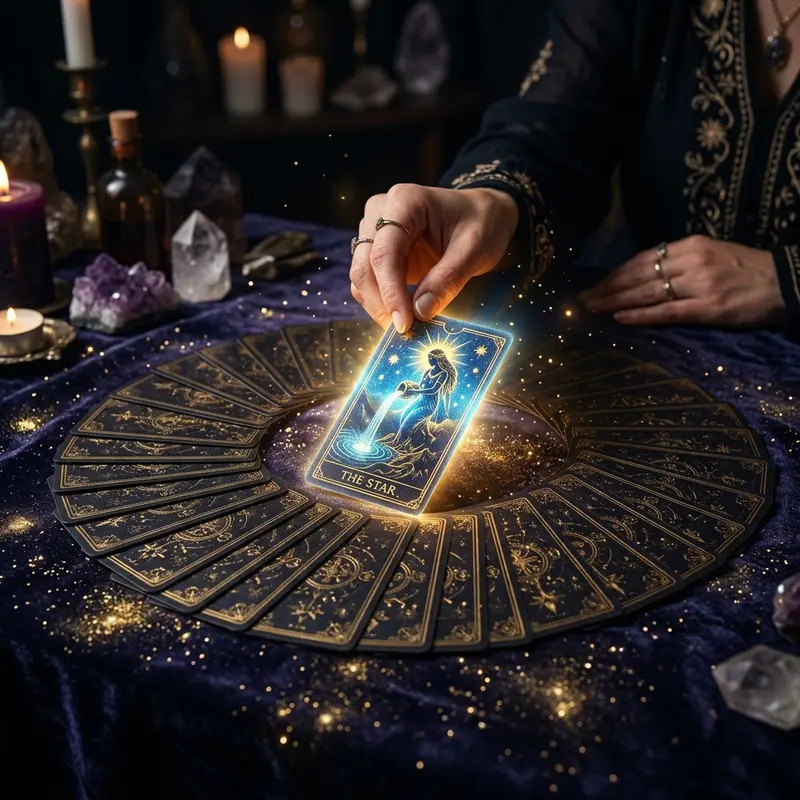
Certain Tarot cards resonate with particular resonance for those experiencing anxious attachment. The Moon (XVIII) — with its imagery of shifting shadows, hidden depths, and nighttime fears — often appears in readings when anxiety, distorted perception, and old emotional wounds are distorting the experience of the present. The Star speaks to the possibility of hope, inner alignment, and the gentle rebuilding of trust — in oneself and in others. The Strength card, depicting the gentle taming of a lion, represents the kind of compassionate courage required to face one's own fears without being consumed by them. The High Priestess invites stillness, inner knowing, and the development of a deeper relationship with one's own intuition rather than constant external seeking. Each reading is unique, but the Tarot consistently provides rich symbolic vocabulary for exploring even the most complex emotional territories.

How a Tarot Reading Can Bring Clarity and Alignment
A Tarot reading focused specifically on relationship patterns and attachment can help you identify: which fears are currently driving your behavior in love, which inner resources you have not yet been accessing, what the energetic dynamic between you and a current or potential partner truly looks like beneath the surface, and what aligned next steps might look like on your path toward more secure and harmonious connection. The process of sitting with symbolic images and allowing them to speak to your situation activates the intuitive mind in a way that analytical thinking alone often cannot. It creates space for insights that anxiety typically drowns out. To explore this further, see our related guide on how Tarot can illuminate your attachment patterns and support a journey toward more grounded, secure love.
Is Your Attachment Style Keeping You from the Love You Deserve?
If you recognize yourself in the signs of anxious attachment, a Tarot reading can offer the clarity, compassion, and deeper perspective you need right now. Receive a free love Tarot reading focused on your relationship patterns — no judgment, no pressure, just genuine insight from the cards. Discover what your heart is truly trying to tell you.
Get My Free Tarot ReadingFrequently Asked Questions About Anxious Attachment
Can anxious attachment style actually change, or is it permanent?
Anxious attachment is absolutely not permanent. While it is a deeply ingrained neural and emotional pattern, decades of research in developmental psychology and neuroscience confirm that adults can and do develop more secure attachment styles over the course of their lives. This transformation is supported by consistent therapeutic work, new relationship experiences that provide emotional safety and reliability, and dedicated practices of emotional self-regulation and self-awareness. Being in a relationship with someone who has a secure attachment style can also be profoundly corrective — their consistent, calm responsiveness gradually teaches the anxious person's nervous system that love does not have to be monitored and fought for. Change is real, achievable, and worth every step of the work.
Can I have an anxious attachment style even if my childhood seemed normal?
Yes — and this is one of the most important things to understand about attachment theory. Anxious attachment does not require dramatic trauma or obvious neglect to develop. It can emerge from subtle, cumulative experiences of emotional inconsistency that are not typically recognized as harmful. A parent who was physically present but emotionally preoccupied, a household where needs were met materially but not emotionally, or an environment where affection was unpredictably given and withdrawn — all of these can be sufficient to shape an anxious attachment pattern. The brain's attachment system is exquisitely sensitive, especially in the first years of life, and it responds to the emotional quality of caregiving, not just its outward appearance. Many people with perfectly "normal"-seeming childhoods carry anxious attachment into adulthood.
How can Tarot complement therapy when working with anxious attachment?
Tarot and therapy serve complementary roles and work beautifully alongside each other. Therapy — particularly approaches like attachment-focused therapy, EMDR, or Internal Family Systems — provides structured, professionally guided support for processing early experiences and building new emotional capacities. Tarot, by contrast, works through symbol, image, and intuition, reaching layers of the psyche that are not always accessible through direct conversation. Many people find that Tarot readings surface feelings, fears, or desires that they had not yet found words for in therapy — and that naming them symbolically opens new avenues for exploration in their therapeutic work. Using both can accelerate self-understanding, deepen emotional insight, and support a more holistic path toward well-being in love and in life.
What do the cards say about this?
Intuition speaks through signs. The Gypsy Deck can translate these energies into practical advice for your life now.
Get Free Reading