

 EN
 FR
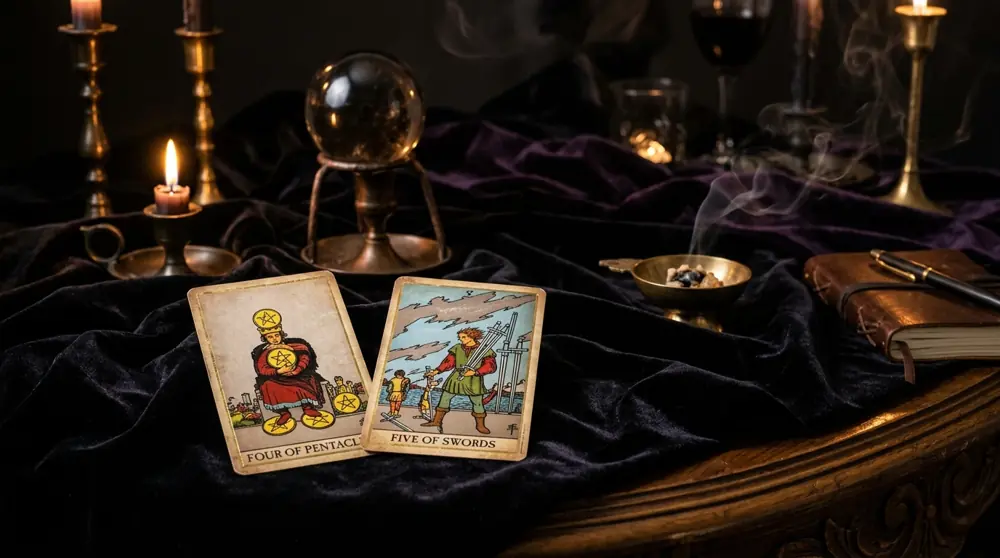
Subtle shifts in mood, sudden brooding silences, disguised inquiries about whom you were talking to, or guarded body language after a social gathering: almost everyone has encountered moments where a romantic partner or crush seems uneasy, yet hesitates to admit what is truly stirring within. In relationship cartomancy, asking is he jealous of me in Tarot offers a piercing mirror into the hidden currents of emotional insecurity. Contrary to romanticized myths, jealousy rarely stems from the depth of genuine love; rather, it grows from the fear of loss, unhealed wounds of unworthiness, and an appetite for control that the cards lay bare with striking lucidity. Among the most telling cards, the Four of Pentacles, Five of Swords, The Devil, and The Moon expose everything from possessive attachment to silent paranoias.
Love Tarot
Is He Jealous of Me? What Tarot Reveals About Insecurity, Possessiveness, and Hidden Feelings
Written by Tarot Center Staff
Ethical & Emotional Perspective: Jealousy is an emotional gauge of human insecurity, never a healthy romantic badge of devotion. Tarot serves as an instrument of psychological self-awareness and discernment, never an excuse to tolerate toxic control, surveillance (such as snooping through personal phones), or manipulative emotional games. True partnerships thrive on mutual autonomy, open dialogue, and steady trust.
The Psychological Anatomy of Jealousy in Tarot: Fear, Possession, and Shadow
To interpret jealousy accurately across the 78 archetypal cards illustrated by Pamela Colman Smith and directed by Arthur Edward Waite, one must recognize that jealousy is not a standalone primary emotion. It is a combustible mixture of three psychic drivers:
- Fear of Loss (Earth / Pentacles): The dread of being replaced, unseated, or deemed inadequate in comparison to perceived rivals;
- Paranoid Mental Projection (Air and Water / Swords and Cups): An overactive imagination manufacturing worst-case scenarios from harmless notifications or casual laughter;
- Bruised Pride (Fire / Wands): Egotistical resentment when one feels they are not the sole focus of admiration at all times.
In Carl Jung's depth psychology, jealousy projects the unexamined Shadow onto the romantic partner. When an individual chronically suspects betrayal without factual grounds, they are frequently projecting deep-seated feelings of personal deficit, unaddressed childhood abandonment fears, or unacknowledged inner conflicts.
To master the overarching symbolism of the deck, consult our complete encyclopedia of tarot card meanings or test quick clarity with our interactive Yes or No Tarot Reading.
The Most Telling Tarot Cards of Jealousy and Possessiveness
Specific arcanas act as unmistakable markers when feelings of insecurity flare up into suspicion and defensive posturing:
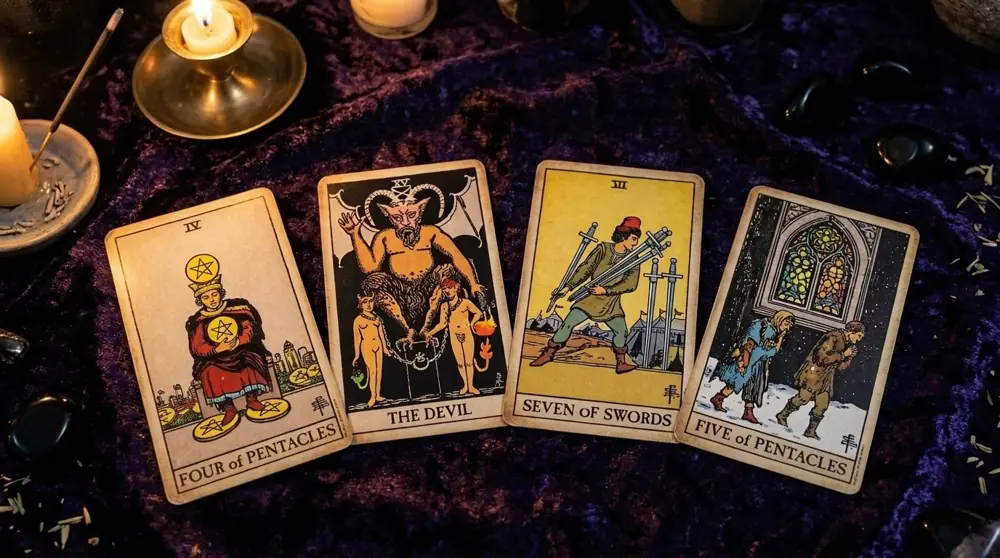
1. Four of Pentacles – Clinging Possessiveness, Guarded Hearts, and Control
The visual of the Four of Pentacles tells its story unmistakably: an austere figure sits upon stone, clutching a golden disc tightly against his chest, pressing two beneath his feet, and balancing the fourth upon his head. He refuses to move, share, or soften, terrified that any gesture of ease will strip him of his possession.
In inquiries about his romantic feelings, this card reveals:
- Possessive jealousy: he views the connection as personal property that must be guarded against the outside world;
- Emotional stonewalling: rather than showing vulnerability, he retreats into guarded silence to protect his pride;
- Underlying insecurity: quiet anxiety that other people in your social or professional orbit might appear more charismatic or appealing;
- Controlling impulses disguised as care: subtle attempts to dictate your schedule, attire, or company.
2. Five of Swords – Bruised Ego, Spiteful Reactions, and Retaliation
The Five of Swords depicts a smug figure scooping up fallen blades while defeated comrades turn away in sorrow. It is the card of hollow triumph where winning the argument matters more than preserving mutual love.
When appearing in jealousy readings, it exposes a reactive, hostile pattern: sarcastic barbs, sulking, intentionally trying to make you jealous to "get even," or belittling your achievements to re-establish dominance.
3. The Devil (Arcana XV) – Toxic Obsession, Emotional Co-dependence, and Chains
Looming above two figures chained loosely to a pedestal, The Devil depicts a self-inflicted psychological cage. The chains are large enough to be lifted off effortlessly, yet the captives remain ensnared by compulsive fear and addiction.
Regarding jealousy, The Devil signals:
- Obsessive, consuming jealousy where thoughts of you become an unrelenting fixation;
- A dangerous sentiment of "if I cannot have you, no one will," demanding firm personal boundaries and emotional self-protection;
- Passionate magnetic chemistry entangled with power dynamics, manipulation, or surveillance;
- Co-dependent drama where arguments and suspicion serve as an unhealthy substitute for genuine intimacy.
4. The Moon (Arcana XVIII) – Whispering Paranoia, Distorted Illusions, and Night Terrors
Under the pale luminescence of The Moon, hounds bark at shifting shadows while a crayfish emerges from the murky depths. This card rules illusions, ungrounded suspicions, and deceptive anxieties.
When The Moon surfaces, his jealousy is real but almost entirely self-generated. He magnifies innocent occurrences into full-blown narratives of deceit, brooding in silent distress over scenarios that exist nowhere except in his own imagination.
5. Seven of Swords and Page of Swords – The Spy, Surveillance, and Watchful Eyes
The Seven of Swords depicts stealthy maneuvers on tiptoe, while the Page of Swords stands alert on windswept ground, blade drawn and eyes scanning every horizon.
Together, they pinpoint active snooping: checking your "last seen" status on messaging apps, monitoring who likes your photos, interrogating mutual friends, or peering over your shoulder at your phone screen.
6. Nine of Swords – Sleepless Nights and Obsessive Replay
A weeping figure sits upright in bed with hands over face beneath nine suspended swords. The Nine of Swords depicts the torture of unchecked nocturnal jealousy: hours spent awake ruminating over imaginary threats, feeling unloved, and trapped in self-generated agony.
7. Reversed Court Figures – Passive-Aggressive Withdrawal and Emotional Guilt
- King of Cups Reversed: Emotional manipulation, guilt-tripping ("if you truly cared about me, you would stay home"), and playing the wounded martyr;
- Knight of Swords: Sudden aggressive cross-examinations, irrational accusations hurled in heat, and impulsive outbursts;
- Knight of Wands Reversed: Restless, petulant withdrawal, ghosting for days because an innocent event wounded his pride.
Cards Indicating Trust, Emotional Security, and Freedom from Jealousy
Not all reserve or seriousness signifies jealousy. When the following cards grace the spread, you can rest assured:
- Temperance (Arcana XIV): Emotional maturity, calm balance, and trust in your freedom and integrity;
- The Star (Arcana XVII): Transparent communication and profound mutual respect; he celebrates your radiance without feeling eclipsed;
- The Sun (Arcana XIX): Bright, joyful clarity with zero hidden suspicions;
- Two of Cups: Reciprocal emotional attunement where both partners feel secure and cherished;
- Ace of Cups: Pure emotional generosity focused on loving without territorial conditions.
Understanding Attachment Styles: Anxious vs. Avoidant Jealousy
Incorporating modern attachment theory developed by John Bowlby illuminates why jealousy manifests so differently in distinct partners:
1. Anxious Attachment (Represented by The Devil, Nine of Swords, Page of Swords): Characterized by fear of abandonment. He demands constant text replies, seeks endless validation, and panics when you assert independence. The tarot advises loving reassurance paired with unyielding boundaries.
2. Avoidant Attachment (Represented by Four of Pentacles, Hermit Reversed, Four of Swords): Cold, shut-down jealousy. When threatened, he retreats into ice-cold detachment, feigning utter indifference while quietly stewing in hurt pride. The tarot counsels calm patience without aggressive confrontation.
Comparison Table: Jealousy Manifestations and Tarot Wisdom
| Card | Jealousy Style | Emotional Root | Tarot Council |
|---|---|---|---|
| Four of Pentacles | Possessive Clinging | Deep-seated dread of being replaced | Hold healthy personal boundaries without submitting to territorial control |
| Five of Swords | Competitive Spite | Immature pride needing to punish or "get even" | Do not engage in petty provocations or play manipulative counter-games |
| The Devil (XV) | Obsessive Entrapment | Severe insecurity masked as dominating power | Protect your autonomy and never rationalize disrespectful or coercive conduct |
| The Moon (XVIII) | Silent Paranoia | Past betrayal trauma and hyperactive imagination | Communicate transparently and offer calm reassurance to factual reality |
| Page of Swords | Surveillance / Snooping | Childish curiosity and distrustful vigilance | Protect your private space and affirm that trust cannot be spied into existence |
| Temperance (XIV) | Absence of Jealousy | Grounded inner peace, balance, and maturity | Enjoy emotional ease and nurture calm, reciprocal communication |
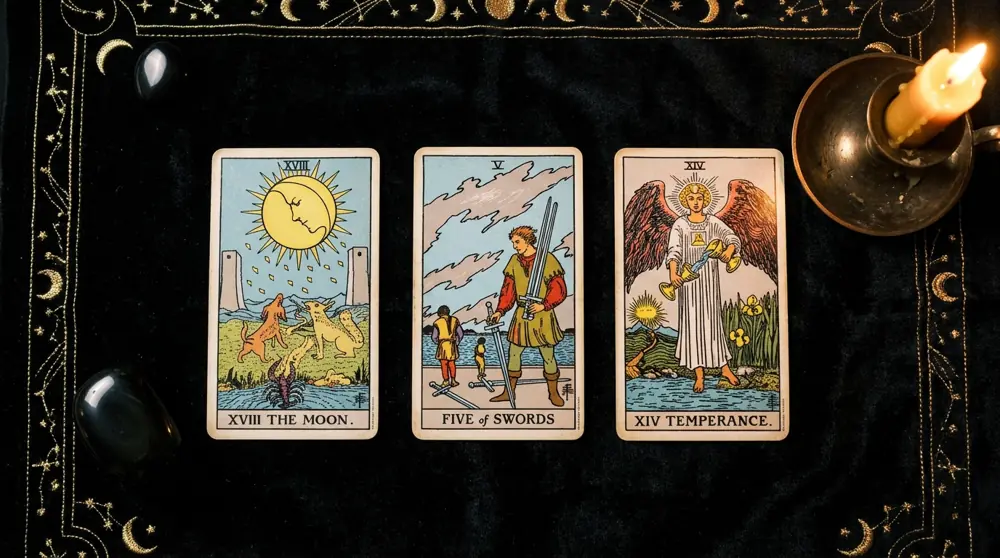
Practical Spread: Jealousy vs. Reality Spread (3 Cards)
Spread Layout:
- Position 1: True Feelings (The Root of Insecurity) — Is he genuinely wrestling with jealousy, or simply stressed, distracted, or dealing with personal pressure?
- Position 2: The External Trigger — Was his unease prompted by a specific event, an unhealed past wound, or a misunderstanding?
- Position 3: The Path of Maturity (Guidance) — Should you address the matter directly, allow space for cooling down, or enforce clear boundaries?
Discover more interactive readings in our comprehensive Tarot Readings Hub anytime.
Constructive Steps: How to Navigate Jealousy with Clarity and Grace
When a reading indicates that your partner or love interest is wrestling with jealousy, the key to resolution lies in avoiding two common extremes: becoming overly accommodating by walking on eggshells, or responding with dismissive contempt. Here is how mature emotional discernment bridges the gap:
- Calm Transparency without Justifying Innocence: Offer clear, grounded facts about your day without adopting the tone of a suspect being interrogated. Honesty dissolves paranoia, but over-explaining feeds the delusion that he has a right to police your life;
- Identify the True Emotional Need: Frequently, underneath a jealous remark is a clumsy cry for reassurance: "Do you still find me desirable? Do I matter to you?" Acknowledging his value without validating his controlling behavior restores harmony;
- Maintain Unshakeable Healthy Boundaries: Never surrender your friendships, passions, or social autonomy to appease someone's insecurity. As the cards of Pentacles teach, healthy self-worth begins with holding your own ground firmly;
- Encourage Open Verbalization: Invite him to speak during neutral, relaxed moments: "I noticed you seemed quiet after dinner yesterday. Is there anything on your mind you'd like to share?" Approaching the subject without accusation disarms his defensive armor.
Frequently Asked Questions (FAQ)
Does his jealousy prove that he truly loves me?
No. As illustrated by the Four of Pentacles and The Devil, jealousy reflects fear of losing possession or a bruised ego. Genuine love expresses itself through mutual trust, respect for individual freedom, and compassionate support.
What should I do if The Devil or The Tower appears in a jealousy reading?
These cards signal volatile, controlling patterns. Never compromise your personal safety or dignity. Maintain your autonomy and seek supportive outside counsel if destructive dynamics escalate.
Can someone act completely unbothered while secretly burning with jealousy?
Yes. Cards like the Four of Pentacles or The Moon often signify individuals whose pride forbids admitting vulnerability. They express their jealousy through sudden passive-aggressive coolness or subtle withdrawal.
Can tarot tell me if his jealousy is justified by my actions?
The trigger card illuminates this distinction: ambiguous cards like the Seven of Swords suggest communication gaps needing mutual clarification; cards like The Moon reveal that the jealousy is entirely rooted in his internal anxieties.
Should I deliberately make him jealous to test his feelings?
Tarot strongly cautions against this (embodied by the destructive Five of Swords). Provoking jealousy breeds lasting distrust and attracts emotionally insecure partners who seek domination rather than reciprocal affection.
What do the cards say about this?
Intuition speaks through signs. The Gypsy Deck can translate these energies into practical advice for your life now.
Get Free Reading