

 EN
EN FR
FRGypsy Deck
How Does the Gypsy Deck Work? Complete Guide for Beginners
Written by Tarot Center Staff

Introduction to the Gypsy Deck Universe: What It Is and How It Works
The Gypsy Deck, widely known in European and global cartomancy circles as the Petit Lenormand, is one of the most popular, fascinating, and objective oracle systems in the modern world. Unlike other methods of divination and counseling that use dense structures of arcana and highly abstract meanings, the Gypsy Deck stands out for its incredible ability to provide direct, clear answers focused on the practical events of daily life. Whether reflecting on romantic relationships, career decisions, financial planning, or life path choices, this deck serves as a true symbolic beacon, illuminating points of doubt with age-old wisdom. For those seeking immediate guidance, performing a free tarot reading is an excellent starting point to gain clarity.
Today, the search for accessible ways to play free gypsy deck and access reliable free online tarot platforms has grown exponentially. This occurs because people seek moments of intuitive connection, self-analysis, and quietude amidst a busy and uncertain routine. Playing gypsy cards does not mean predicting a static or unchangeable destiny; it is an excellent exercise in self-knowledge and mapping energy trends, allowing you to make more conscious and thoughtful decisions. Throughout this complete guide, you will learn all about the operation of this wonderful oracle, the mysteries surrounding its origin, the structure of its 36 symbols, and how to interpret card combinations like a professional.
The True Origin of Petit Lenormand and the Fame of Mlle. Lenormand
Although in Brazil and Portuguese-speaking countries the deck is affectionately associated with the rich spiritual tradition of the Gypsy people — who historically played an indispensable role in preserving and spreading the secrets of cartomancy and palmistry around the world —, the origin of its classic structure is firmly rooted in Western Europe at the turn of the 18th to the 19th century. The name of the oracle is a posthumous tribute to the legendary French cartomancer Marie Anne Adelaide Lenormand (1772–1843). Mlle. Lenormand became one of the most influential and discussed women in Paris, providing mystical counseling to Empress Josephine de Beauharnais and even Emperor Napoleon Bonaparte himself, consolidating the international fame of her reading system.
Interestingly, the 36-card deck we know today was not created directly by her. The classic Petit Lenormand was based on a board and card game invented in Germany in 1799 by the young entrepreneur Johann Kaspar Hechtel, called "The Game of Hope" (Das Spiel der Hoffnung). After the death of Mlle. Lenormand, Parisian printers decided to use her famous name to launch the card game for oracle reading purposes. The success was immediate due to the clarity of the images and the ease with which anyone could associate the archetypal symbols with events in their lives. If you wish to delve deeper into the detailed biography and cultural impact of this famous French cartomancer in the context of the Revolution and the Empire, we recommend reading the article on Mlle. Lenormand on Wikipedia, an excellent historical source attesting to the social importance of this oracle at the time.
Gypsy Deck vs. Traditional Tarot: The Main Differences
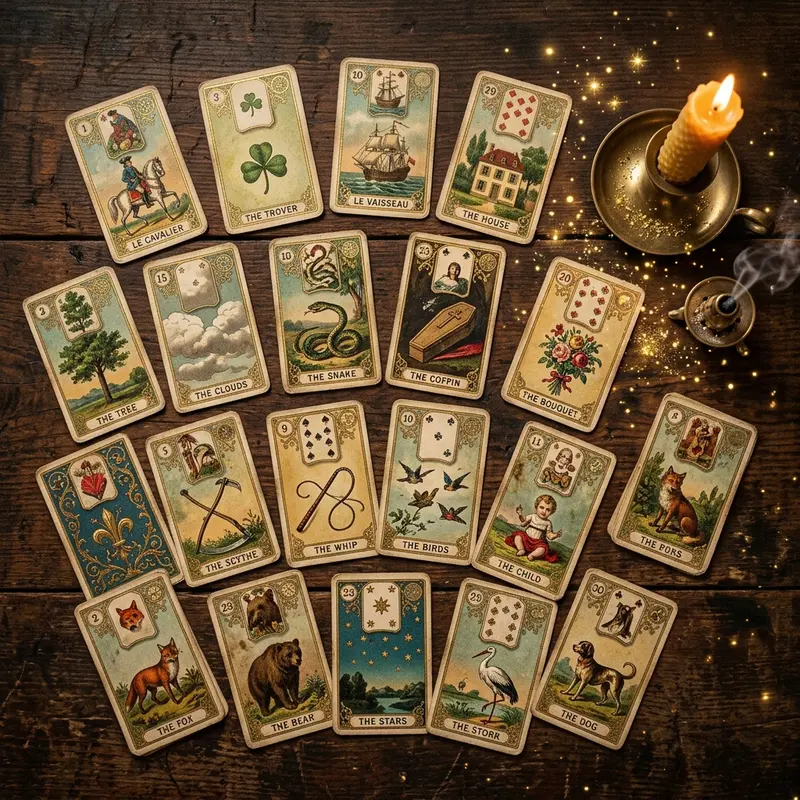
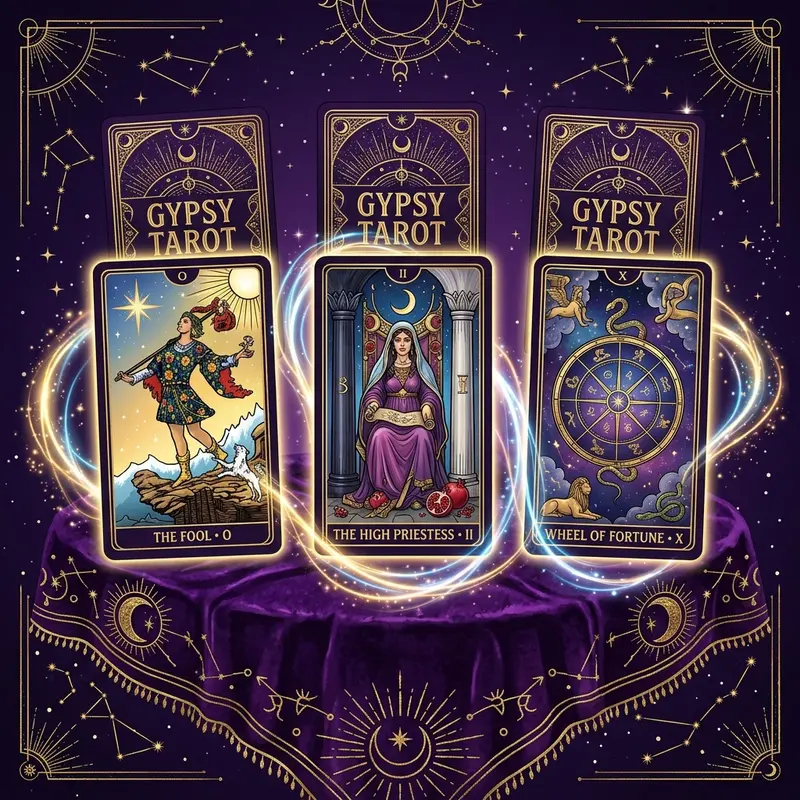
For those entering the world of card reading, it is extremely common to confuse the Gypsy Deck with traditional Tarot. However, these are two distinct oracles in structure, history, and practical philosophy. The first major difference is in the size of the deck: while traditional Tarot is composed of 78 cards (divided into 22 Major Arcana and 56 Minor Arcana), the Gypsy Deck has strictly 36 cards. Furthermore, the reading approach of each follows distinct logical lines. Many consult the gypsy cards looking for quick predictions, but integrating this practice with a free tarot reading offers a complementary and very rich overview.
Traditional Tarot functions as a tool for deep, philosophical analysis and inner evolution. A single Tarot card, like The Hermit or Temperance, carries a vast array of complex concepts inviting the querent to look at their inner state. On the other hand, the Gypsy Deck is focused on the objectivity of physical and immediate situations. It does not get lost in abstractions: if you draw the House card, it talks about your physical home; if you draw the Mice, it speaks of energy drain or material loss. The Gypsy Deck functions as a direct dialogue between the querent and physical reality, which makes it ideal for questions about daily events and quick resolutions.
The Structure of the 36 Archetypes and the Correlation with Common Suits
Each of the 36 cards of the Gypsy Deck has a number, a symbolic name, and an association corresponding to a common playing card of the four suits (Hearts, Diamonds, Spades, and Clubs). This double correspondence is rich for advanced readers. For example, card 31 (The Sun) is associated with the Ace of Diamonds, reinforcing the message of material success, brightness, and financial prosperity. Card 24 (The Heart) is linked to the Jack of Hearts, intensifying the presence of passions, new feelings, and youthful affection.
In addition to the suits, the 36 cards are commonly divided by their energetic polarity into three main groups:
- Positive Polarity Cards: These are the ones that bring affirmative answers and confirm the harmony of a situation. Examples include the Sun (31), the Star (16), the Key (33), the Flowers (9), and the Anchor (35). The presence of these cards in the reading indicates a free flow of energy and victory over obstacles.
- Negative Polarity Cards (Challenges): They function as safety alerts for the querent, pointing out risks, delays, or wear that require caution. Prominent examples are the Snake (7), the Mice (23), the Scythe (10), the Cloud (6), and the Coffin (8).
- Neutral Polarity Cards (Context): These are cards whose final meaning depends entirely on the cards around them. The Letter (27) indicates communication, but we will only know if the news is good or bad by looking at the neighboring card. The Book (26) speaks of secrets and studies; the Ship (3) speaks of travel and transitions; and the Crossroad (22) indicates choices to be made.
Meaning of the Strongest Symbols of the Petit Lenormand
Understanding the basic symbolism of each card is the foundation for performing good readings. Let's detail some of the most important archetypes of this deck so you can start associating their meanings immediately:
The Rider (Card 1)
The Rider represents the arrival of news, fast-paced events, visitors, or moving messages. It is a card of action that stimulates us to leave inertia behind. It shows that the answer to your doubt is on the way and that the energy of the moment demands initiative and courage.
The Clover (Card 2)
Traditionally known as the card of passing obstacles or quiet luck, the Clover shows small mishaps in daily life that can be overcome with good humor and flexibility. It teaches that not every challenge is permanent and that luck favors those who act with optimism.
The Ship (Card 3)
The Ship rules transitions, major journeys, physical travel, and long-term changes of direction. It is a symbol of expanding horizons, inviting the querent to let go of the past and sail toward new intellectual or geographical opportunities.
The House (Card 4)
The House speaks of stability, family security, the physical home, and our deepest foundations. It represents the safe haven where we retreat and the support of those we love, indicating that the answer to the doubt lies within the family or in the stabilization of your current bases.
The Tree (Card 5)
The Tree is the ultimate symbol of slow and continuous growth, physical health, and lasting vitality. It reminds us of the importance of creating strong roots to harvest healthy fruits in the future, indicating protection, durable progress, and connection with the natural timing of things.
How to Interpret Card Combinations: The Oracular Grammar
In Gypsy Deck readings, the golden rule is: **a card should never be interpreted in isolation**. Since cards function like words, reading the gypsy deck requires connecting the symbols to form a clear interpretive sentence. The card that comes first usually acts as the noun (the main theme of the reading), while the next card functions as the adjective or verb (the modifier of the theme).
Let's analyze a very clear example of this grammatical dynamic. Imagine your question is about your financial and professional life. If you draw the Bear (15) and the Fish (34) in that order, we have the following sentence: the Bear represents power, protection, or resource control; the Fish represents the flow of money and material prosperity. The combination indicates that the Fish (money) is under the protective or controlling influence of the Bear, signaling an ideal time to save resources or that there will be a well-protected financial input. If the order of the cards were reversed to Fish (34) + Bear (15), the money would be target of the Bear's dominating energy or jealousy, warning of impulsive spending caused by vanity or power struggles.
This flexibility of meanings shows the richness of gypsy cartomancy. You can study the detailed definitions of each card on our Card Meanings page, facilitating your understanding and allowing you to decipher oracular sentences with greater speed and precision when playing free tarot or doing more complex in-person spreads.
The Role of Intuition, Concentration, and Question Formulation
For a gypsy card reading to bring valuable and reflective insights, the querent needs to pay special attention to their own state of mind at the moment of reading. Intuition should not be seen as an inaccessible gift reserved for a few people, but as our innate ability to make playful and symbolic correlations in front of universal archetypes. When performing a card reading on our site or with a physical deck, the act of concentrating creates a mental and energetic alignment essential to receiving coherent advice.
One of the most common mistakes for beginners in free online tarot readings is formulating vague, ambiguous, or confusing questions. Questions like "What does the future hold for me?" usually generate disorganized readings, as the cards try to cover too many aspects simultaneously. To get precise answers, be objective. Prefer to structure your doubts in a focused way, for example: "What are the main challenges in my search for a new job?", "How can I restore harmony in my family life this month?", or "What advice do the cards bring for my current love life?". By asking clear questions, the answer in gypsy deck combinations becomes immensely clearer and more useful for your daily decisions. This clarity is equally essential when using any free tarot tool, as the formulation of the question shapes the quality of the advice received.
Identity Cards and Their Importance in the Grand Tableau
Among the 36 cards of the Petit Lenormand, there are two crucial cards that represent the people involved in the reading: card 28 (The Gentleman or The Man) and card 29 (The Lady or The Woman). These figures are known by cartomancers as "Identity Cards" or "Personal Cards" and serve as the visual starting point for any deeper reading, especially in full tableau layouts.
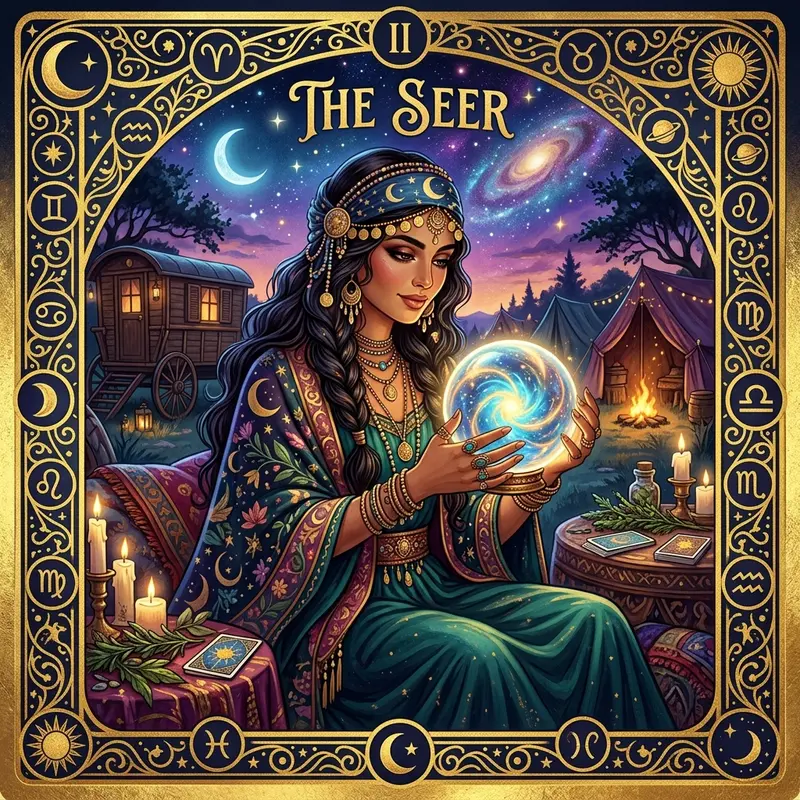
In the famous **Grand Tableau** layout, where all 36 cards of the deck are laid out together on the table, the physical position of cards 28 and 29 is decisive. Cards located above the head of the Gentleman or the Lady represent immediate concerns or ideas occupying the querent's mind. Cards appearing behind the figure represent the past that has already been overcome or is being left behind. In turn, cards positioned in front of the direction of the gaze indicate the future trends the person is about to experience. Furthermore, the distance between the identity card and other key symbols (such as the Key or the Heart) helps measure the temporal proximity of the querent to the resolution of their greatest desires.
Essential Success and Alert Combinations in the Gypsy Deck
Mapping combinations of success and alert is one of the greatest differentiators for anyone wishing to learn how to read gypsy cards properly. Below, we highlight some of the most influential pairs in readings and explain how to interpret them in the context of practical counseling:
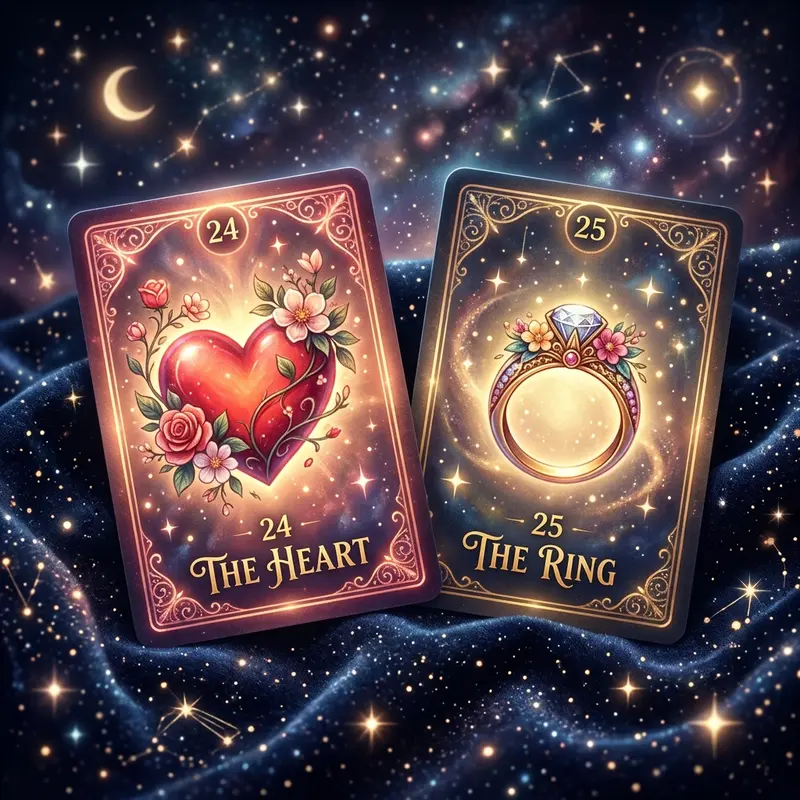
1. The Heart (24) and The Ring (25): The Pinnacle of Feelings
When the Heart card (symbol of sincere feelings, affection, and mutual love) is positioned next to the Ring card (symbol of contracts, marriages, stable partnerships, and promises of union), the reading points to a phase of great emotional fulfillment. It is the classic indication of a serious romantic commitment gaining strength, or a harmonious reconciliation based on pure intentions of loyalty.
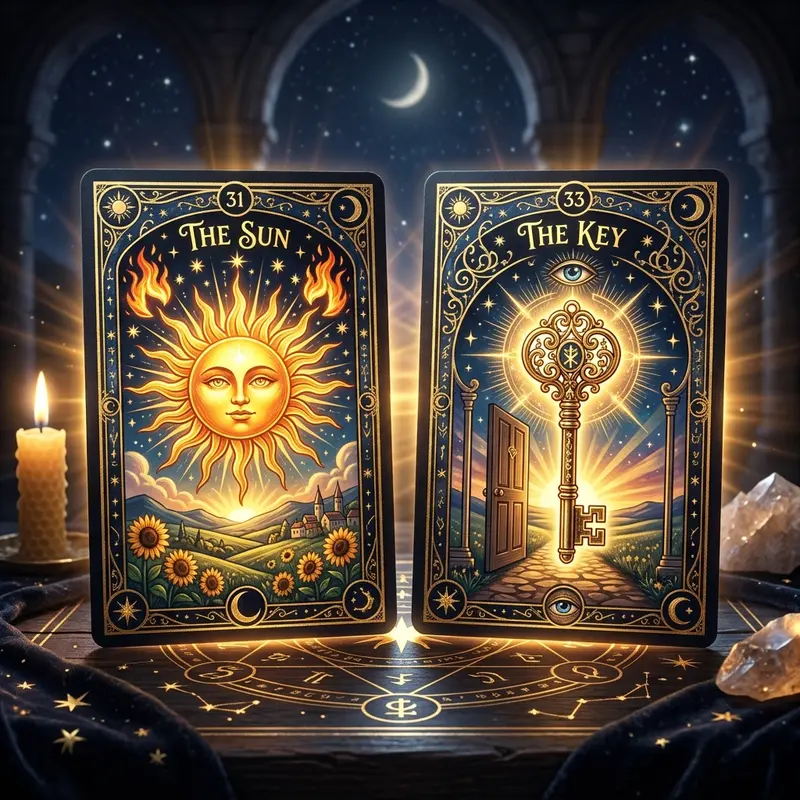
2. The Sun (31) and The Key (33): Open Doors and Promising Outlooks
The Sun radiates warmth, vital positive energy, and absolute clarity over any misunderstanding. The Key brings the correct action, the discovery of previously hidden solutions, and the decisive act of opening new doors in practical life. Together, these cards signal a strong trend of success and suggest ways to overcome old problems with intelligence and personal brightness.
3. The Snake (7) and The Mice (23): Alert of Wear and Betrayal
This is a strong alert combination in readings. The Snake symbolizes falsehood, dangerous cunning, or ill-intentioned people nearby. The Mice represent the gradual loss of energy, accumulated stress, and wear of material resources. The presence of this pair indicates that the querent is being exposed to a situation or person that silently drains their energy, suggesting retreat, protective silence, and immediate withdrawal from draining arguments.
The Main Methods of Gypsy Card Readings
For the answers of the gypsy cards to make sense in your life, it is very productive to adopt a specific layout method. Depending on the time available and the level of detail you seek, we recommend using one of the three consolidated methods below:
1. The Classic Three-Card Method
Ideal for quick answers about the progress of a project or the resolution of a simple dilemma. Draw three cards and place them side by side from left to right. The first card represents the origin of the situation (recent past); the second card reveals the situation as it is today (immediate present); and the third card points to the most natural trend of outcome if the current energy is maintained (near future). Remember to read the interaction between them to get the full answer.
2. The Temple of Aphrodite for Emotional Matters
This method is preferred by querents of the Love Tarot. It uses six cards arranged in two parallel columns representing the energies of each partner, and a seventh card at the top as the final advice. It details what each thinks (rational level), feels (emotional level), and how they are behaving (physical level), offering a rich outlook on the future of the relationship.
3. The Counsel Cross
Arranged in the shape of a Latin cross, this classic method quickly reveals what is cooperating in your favor and what opposing forces you need to overcome. The card in the center describes the current situation; the one on the left points the way in favor; the one on the right indicates the challenges; the top card shows the potential for realization; and the bottom one brings the final advice of the oracle.
Practical Guide to Conduct and Care for Beginner Cartomancers
Practicing Gypsy Deck reading is a wonderful journey of self-discovery and mental exercise. If you wish to read cards for yourself or close people in a recreational way, pay attention to these ethical and practical advices:
- Trust the Strength of Your First Impressions: When the cards are laid out on the table, the visual symbols make an almost instantaneous connection with your intuition. Trust that first interpretive spark. Avoid over-rationalizing or trying to twist the meaning just to get the answer your ego desires.
- Avoid Asking the Same Thing Repeatedly: If you did a gypsy card reading and the result was challenging or confusing, avoid gathering the cards and scrambling again to ask the same question. Excessive readings on the same topic create interpretive confusion and remove the seriousness of the reflective consultation. The ideal is to wait a few days or until there are changes in the practical situation to consult the oracle again.
- Keep a Written Record of Your Readings: Note down the cards drawn, the date of the consultation, and the question asked. Reviewing these notes weeks later will help you see how the symbolic language of the gypsy cards manifested physically in your days, considerably accelerating your practical learning.
- Respect the Limitations of the Oracle: Always remember that the cards show energy trends and reflective advice for the present moment. They should not replace medical evaluations, professional legal advice, or your own individual responsibility to make decisions in real life. Use the Gypsy Deck as a wise counselor and a symbolic beacon for your daily life. This reflective and focused posture should be maintained whether playing the gypsy deck or doing a free tarot reading online.
Conclusion: The Gypsy Deck as a Beacon of Self-Knowledge and Daily Reflection
In final instruction, the Gypsy Deck, or Petit Lenormand, is an extraordinary tool for self-knowledge, playful meditation, and daily advice. The simplicity of its figures, combined with the depth of its grammatical rules of card combination, makes it one of the most practical and precise oracles in existence, ideal for both beginners and experienced professional cartomancers.
If you wish to receive an immediate and reflective answer to your current situation or obtain advice for your day, we invite you to perform a free gypsy deck reading on our platform. The Tarot Center portal offers interactive and 100% user-friendly tools to guide your journey through the symbols. Also, take the opportunity to try our free tarot and tune your intuition with the wisdom of the cards. Take a few minutes to calm your mind, formulate your question with wisdom, and allow the secular magic of the gypsy cards to bring clarity and new perspectives to your daily paths!
What do the cards say about this?
Intuition speaks through signs. The Gypsy Deck can translate these energies into practical advice for your life now.
Get Free Reading